Why analog games matter more than ever.
On losing gracefully and sitting across from someone.
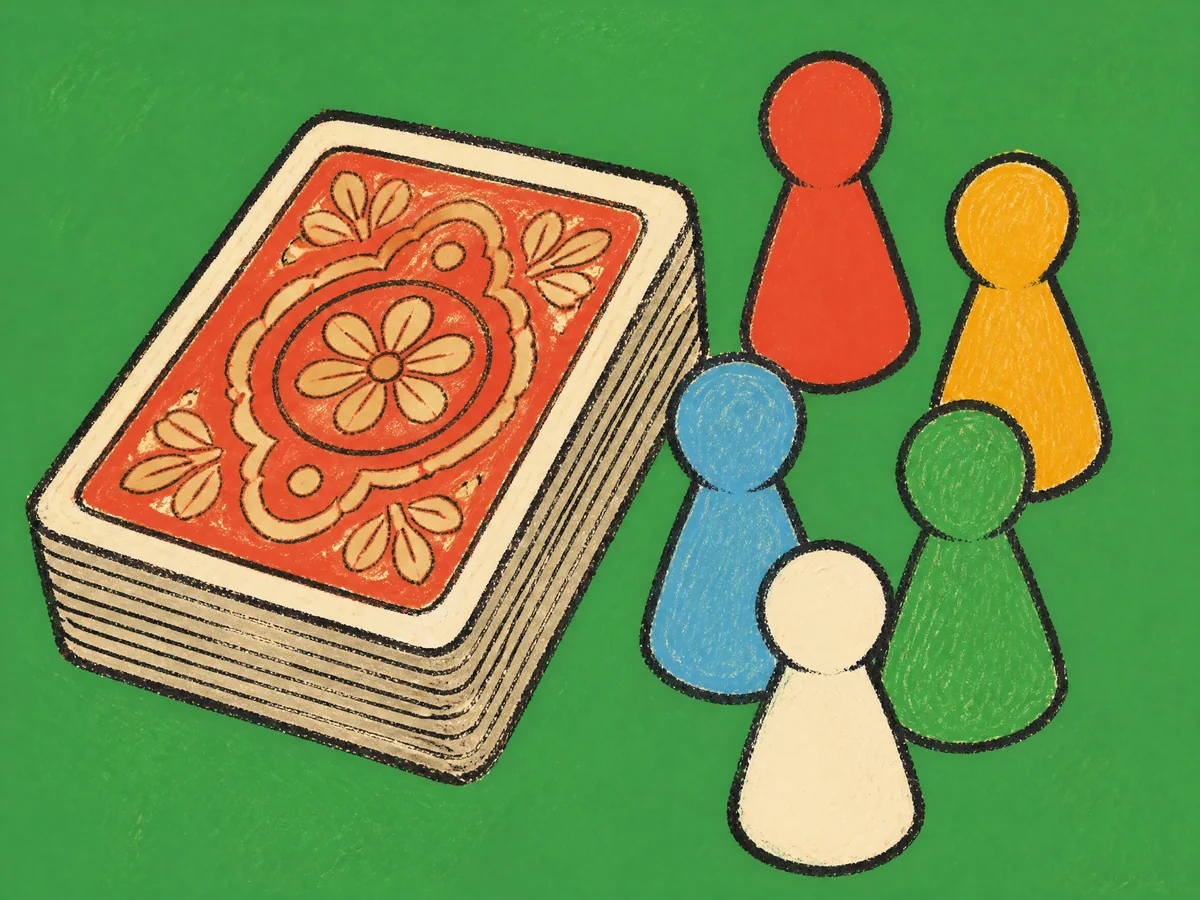
A card game is a machine for making people look at each other. That is genuinely the whole product. The rules exist so the table has something to do with its hands while the actual event, which is company, takes place.
Digital games are extraordinary and I am not here to argue against them. But they point everyone at a screen. Analog games point everyone at each other, and the difference shows up in what people remember afterwards. Nobody recalls the score. They recall who bluffed badly and who laughed.
Games also teach losing at a survivable scale. Losing a hand of cards in your own kitchen is the gentlest possible version of an important adult skill, and doing it with people who will still like you afterwards is how the lesson lands.
Choose for the table you actually have. Two people want something short and sharp. Four to six want something loud with a low rules overhead, because explaining a game for twenty minutes kills the evening you were trying to have. And keep it visible: a game in a cupboard is a game that never gets played.
Put it into practice
Objects that make this easier.
Journals, puzzles, card games, and other things worth holding.
Browse the shop